This guide explains how EPayslips interfaces with government systems such as “Grz Gov Zm,” focusing on practical access, verification, and compliance. It outlines what ePayslips typically contain, why secure viewing matters, and how suppliers or employers may influence availability, while keeping the discussion objective and usability-first.
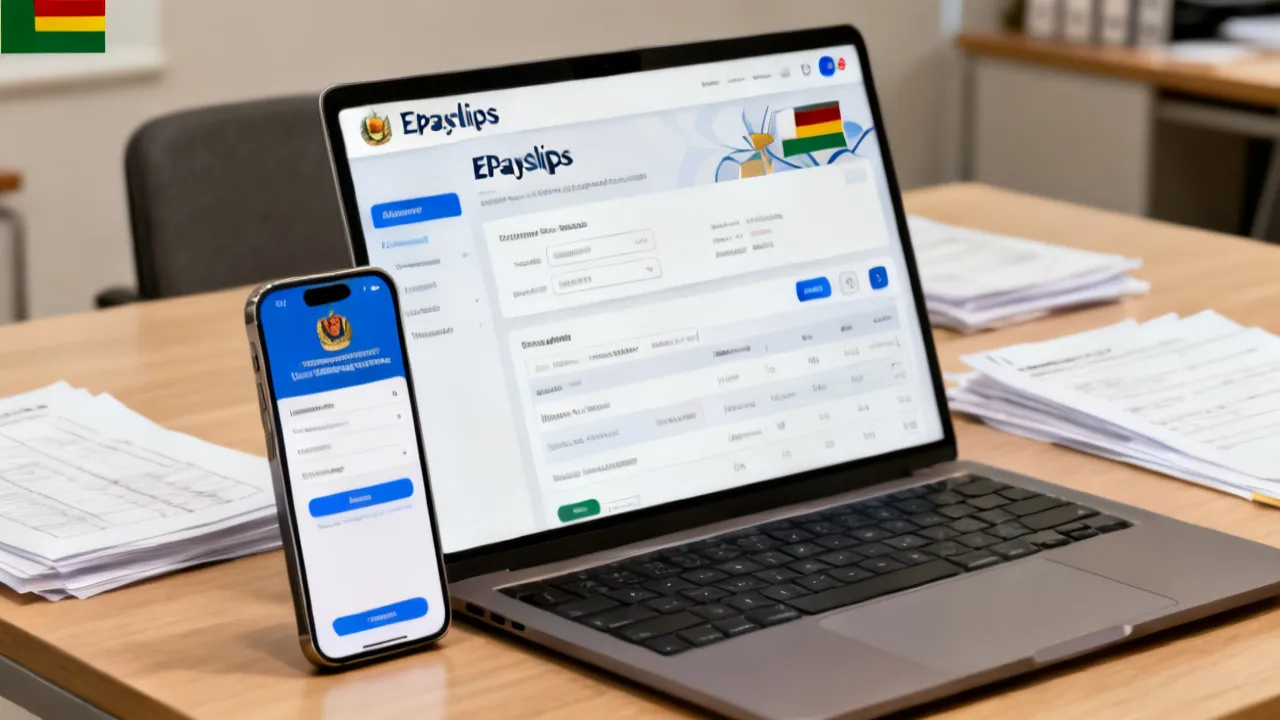
EPayslips is commonly used to deliver salary-related documents electronically, and when users mention “EPayslips >@ Grz Gov Zm,” they are usually referring to a government-linked access path—meaning the document viewing portal is connected to an official or employer-managed payroll workflow. In practical terms, you should treat the process as an identity-verified document delivery service: you authenticate (or are authenticated on your behalf), then you view/download your ePayslip from the correct channel, ensuring the document matches your employment records.
Because ePayslips are tied to payroll accuracy and personal identity, your priority isn’t just getting a file; it’s making sure the file corresponds to the correct pay period and the correct person. That single discipline—“verify identity and verify period”—solves the majority of “missing ePayslip” problems in centralized payroll systems. When someone describes a reference string like “Grz Gov Zm,” that often functions as a shorthand cue that the document portal is connected to a specific government program or system namespace. You should use it as a contextual hint, not as an informal alternative to the official entry point given by your employer or payroll administrator.
One more key takeaway: many people assume that if they can log in, the latest ePayslip must already be posted. In many systems, payroll processing, approvals, posting, and document generation are separate stages. So a login working does not necessarily imply that your document has been published for the period you want. If you keep that separation in mind, troubleshooting becomes more systematic and less frustrating.
When someone searches for “Epayslips >@ Grz Gov Zm”, the intent is often operational: “I need to view my payslip, and I want to make sure I’m using the right government or payroll route.” Even without assuming any single country’s exact implementation details, the pairing signals a system relationship between:
From an industry perspective, this is typical of centralized payroll systems where the front-end document viewer is distinct from the back-end payroll ledger—yet still integrated. The viewer is responsible for the employee experience (search, filters, downloads, viewing). The ledger is responsible for the payroll calculations and the authoritative payroll data (earnings, deductions, tax and contributions, arrears, and corrections). Integration ties them together so the viewer can show the correct document, but it doesn’t guarantee instant availability.
In other words, the “keyword pairing” matters because it points you toward the correct ecosystem: it’s not just “find any payslip PDF on the internet.” It’s “use the official workflow that ensures the payslip is generated from the correct payroll ledger and is delivered securely to the correct identity.” If you approach it this way, you’ll likely notice a pattern: official portals usually require a verified identity session, and they often show documents only after a posting or release milestone.
Another reason the pairing matters is risk management. Payslips contain sensitive financial and personal data. If you treat “EPayslips >@ Grz Gov Zm” as a signal to use official channels, you reduce the temptation to use third-party download sites. This is important because fraud and phishing often target users who are searching for “missing payslips” during payroll release periods.
While layouts vary by employer and payroll model, a standard ePayslip is designed to be machine-readable and auditable. As you review your ePayslip, focus on items that have compliance and reconciliation value:
Why this matters: a secure portal can deliver the document, but payroll accuracy is confirmed only when the data aligns with your actual HR and payroll settings. For many employees, the ePayslip becomes the primary record for budgeting, loans, visa applications, proof of income, and tax verification. If you notice a mismatch, you need enough detail to explain it to payroll rather than relying on memory.
Here are additional checks that often save time later:
It can also help to keep a simple personal record: once you download each payslip, note the pay period month and store the file in a consistent folder naming format (for example, “YYYY-MM Payslip”). This reduces confusion if you later need to retrieve an older copy or compare an original versus reissued document.
Electronic payslips are financial and personal records. Industry top practice is to minimize account takeover risk by following safe viewing habits:
Security is not only about avoiding scams; it’s also about minimizing accidental exposure. For example, many employees mistakenly share photos or screenshots in chat groups. Even if they remove a name, other identifiers may remain visible—such as national IDs, account references, or QR codes printed on the payslip. Those “hidden” identifiers can still be used for identity theft or targeted phishing.
To reduce risk while using the portal, you can adopt these habits:
Finally, remember that secure portals can still be accessed safely by you without being paranoid. The balanced approach is: use official entry points, verify the domain, authenticate properly, and avoid sharing. That is usually enough to maintain both security and usability.
Your query includes “supplier details” in the instruction, and while the exact supplier is not explicitly provided in the keyword block, it’s common that payroll portals involve multiple parties:
From an expert standpoint, when an employee cannot locate an ePayslip, the cause is often not “missing data” in the personal sense, but an integration delay, a mismatch in the identity mapping, or an incorrect pay period selection. Supplier roles help explain why issues can look like “portal” problems but originate in payroll record synchronization.
To make this more practical, consider these typical cross-system failure points:
Another reality is that employees rarely know the exact supplier chain. The important part for the employee is not the name of the supplier; it’s the responsibility chain. Usually, the HR/payroll helpdesk can route your request to the correct operational team or system owner. If you provide structured evidence (pay period expected, screenshot of the portal error, your employee identifier as displayed—without exposing sensitive information publicly), you speed up diagnosis.
So when the phrase “supplier details” is referenced, interpret it as “there may be multiple systems involved, and different suppliers can be responsible for each stage.” This interpretation keeps troubleshooting logical, and it helps avoid blame directed at the portal UI when the issue is actually a payroll posting or identity mapping layer.
Below are typical situations you may encounter—presented neutrally, without claiming any single implementation’s exact user flow. Different portals may display different navigation, but the underlying system behavior tends to follow common patterns: identity verification, pay period filtering, document availability after posting, and secure download/view sessions.
Likely causes include payroll posting timing, pay period misalignment, or a lag between ledger finalization and document generation. A reliable troubleshooting approach is to confirm the pay period and compare against the expected payroll schedule communicated by your HR/payroll unit.
In practice, “latest doesn’t appear” often means one of these scenarios:
A useful method is to broaden your search in the portal (if it offers month filters) and confirm what the portal calls the periods. Sometimes the portal uses “issue month” rather than “work month.” If HR told you the payslip should be for a certain month, but the portal shows an “issue date,” you may need to match the portal’s period labeling rather than assume it matches the calendar month.
This can happen when adjustments (e.g., arrears, corrections, or re-issues) are processed as separate batches. The ePayslip viewer might show only the finalized version. If an “adjusted” payslip exists, it may appear under a later document issue date.
For a more nuanced understanding, consider these “partial visibility” patterns:
Therefore, you can’t always assume missing means “never generated.” It can mean “replaced by another version.” That’s why document metadata—issue date, reference number, and any “corrected” labels—matters.
In secure systems, identity verification is strict. Even a minor mismatch (e.g., differences in name formatting or ID reference) can block access to the document set. The top step is to contact your payroll/HR help channel rather than repeatedly attempting login in ways that may trigger security lockouts.
Authentication issues tend to fall into categories:
Because repeated attempts can sometimes lead to lockouts or rate limiting, it’s better to record what happened (error code/message) and escalate rather than continue clicking.
Because the keyword set points to a government-linked access approach, the operational aim is to help you use the correct channel and validate results. Follow this objective workflow:
To expand on “download and archive securely,” consider practical storage guidance that employees often overlook:
Escalation deserves one more practical note: support teams can resolve issues faster when you provide “what you expected” and “what you observed,” not just a general complaint. Example of structured escalation evidence:
This helps the payroll team correlate the time of your request with posting cycles and document generation jobs.
The table below rephrases additional information requirements as practical comparisons, including conditions/requirements that commonly affect access and document availability.
| Issue / Goal | What to Check | Likely Owner (Source Layer) | Conditions / Requirements |
|---|---|---|---|
| Cannot find latest ePayslip | Correct pay period; latest posting date; whether the portal indicates “finalized” status | Payroll posting & document generation layer | Payroll must be finalized for that period; identity mapping must be active |
| ePayslip shows incorrect figures | Earnings/deductions line items; reference numbers; compare to your payroll advice if available | Payroll ledger provider | Adjustments may require HR verification; deductions must match your approved setup |
| Login or verification fails | Account status; identity fields consistency; error messages and timeouts | Portal authentication & identity service | Your ID details must match HR records; security rules may limit repeated attempts |
| Older months are missing | Whether the portal retains historical documents; whether reissued documents exist | Document retention policy & archive system | Retention settings may differ; reissues may appear under later issue dates |
| Portal access works but download fails | Browser settings; file download restrictions; device storage; session timeouts | Portal UI / client-side delivery | Stable connection; supported browser; session must not expire mid-download |
To make the table even more actionable, here are typical “conditions” employees can verify on their side without needing backend access:
Those are “client-side” conditions. Anything involving posting/finalization, identity mapping, and reconciliation is “server-side” and belongs with HR/payroll support.
In many payroll modernization initiatives globally, organizations move toward electronic documentation to improve timeliness, auditability, and operational efficiency. The typical governance approach is to ensure that the ePayslip viewer:
For objective background, it’s useful to note that governments and payroll operators often align with data protection principles such as access controls, confidentiality, and integrity. For general guidance on personal data handling principles, organizations commonly reference frameworks like the OECD Privacy Guidelines and national data protection regulations. (No single framework is claimed to be the exact one used in any specific jurisdiction.)
What this means practically for employees is that the system is designed to reduce unauthorized access and to prevent tampering. A viewer that allows edits to payslip numbers would undermine auditability, so most official systems treat payslips as read-only documents generated from controlled payroll processes.
Additionally, ePayslip platforms often implement measures such as:
Those practices can create a “feel” for employees: the portal may be strict, sometimes slower, and often more controlled than a generic file-sharing website. That strictness is not a flaw; it’s the security posture of payroll documentation.
Understanding this context also helps explain why support teams can’t simply “upload your missing payslip” without verifying the payroll ledger state and identity mapping. They often must follow governed processes, which can take time. Your job as an employee is to provide enough evidence to route your request correctly.
Use the following checklist when EPayslips-linked access (including “Grz Gov Zm” references) does not behave as expected:
Confirm the period you expect and whether the portal labels the document clearly (ePayslip vs. summary statement). If you used search filters, try resetting filters or selecting the period manually.
Practical tips:
If the portal displays a different name/ID reference than what HR has on file, pause and escalate. In a properly governed system, mismatches are not resolved by repeated clicks; they require record correction through the owning process.
Identity mapping problems are often subtle. You might see:
In those cases, you should not attempt to “force” access through alternate methods. Instead, contact payroll/HR so they can correct the underlying attribute mapping. If you keep trying, you could trigger lockout conditions on your account.
From a usability perspective, download failures can be device/browser-related. Use an updated browser, disable aggressive ad/script blockers if they interfere, and avoid sharing credentials across devices.
Additional client-side troubleshooting ideas:
If the viewer loads but the PDF download fails repeatedly, the issue is often the client-side delivery step (permissions, download blocked, session expiry, or insufficient storage).
Payroll document generation can be queued. If the pay period is “current,” the payslip might not be posted yet. Confirm the expected payroll release window with your payroll/HR communication channel.
Many organizations follow a release cadence such as “finalize payroll by X date” and “make ePayslips available by Y date.” If you only know the finalize date (or only the working day), you may misinterpret the portal absence as a personal error.
Also, if HR announced reprocessing or corrections (for taxes, arrears, or deduction changes), the payslip could appear later than usual or appear as a revised document version.
When contacting support, provide:
To improve response time, you can also include what you already tried (e.g., “reset filters,” “tried another browser,” “checked issue date sorting”). Support teams appreciate when you remove obvious variables.
You asked to integrate supplier details, but no specific supplier name was included in the keyword block. In real deployments, suppliers are top treated as system “layers,” not as unverified names. Therefore, rather than asserting a particular vendor, adopt a safe interpretation:
This approach keeps the narrative objective and avoids unverified claims.
It’s also helpful to think of “supplier differences” as operational realities you can observe, even if you don’t know the supplier identity. For example:
So you don’t need to guess supplier names. You only need to identify the layer where the behavior indicates an issue: client-side, portal UI, authentication service, document generation service, or payroll posting layer. Your HR/payroll team can then handle the actual supplier escalation internally.
Your instruction includes a localization rule: whenever a city or country appears in keywords, replace it with “nearby.” In this request, the keywords contain “Grz Gov Zm”, which resembles a government-domain shorthand rather than an explicit city/country token in the provided text. Still, the safest way to localize the guidance for users is to keep the process steps broadly applicable while emphasizing “use official employer/HR instructions” rather than assuming one exact navigation path. Users in nearby administrative ecosystems commonly rely on workplace HR circulars, payroll helpdesks, and internal communication channels for access credentials and timelines.
Even without knowing the exact geography, user experience patterns are fairly consistent:
Localization also has a “language” dimension. Some portals may display months or dates in a local format. If you’re searching for a pay period and can’t find it, try switching date display format where possible (for example, “DD/MM/YYYY” vs “MM/DD/YYYY”), if the portal offers that. If not, match the portal’s own month naming and sorting rather than your mental expectation.
Finally, localization affects support channels. HR/payroll helpdesks may operate in a primary language, and error messages may appear in a localized language. When you escalate, copy the error message exactly as shown. That preserves technical meaning even if you are explaining in a different language.
It typically indicates an ePayslip access workflow where “EPayslips” is the document portal concept, and “Grz Gov Zm” is a shorthand reference to a government-linked route or official system context. The exact meaning depends on your employer’s official access instructions.
Because “>@” is not a universal standard symbol, it should be treated as part of a specific system’s naming/connector pattern rather than as a literal instruction you can type into a browser. In most cases, the correct action is to follow the official portal link and navigate within that system rather than trying to reconstruct the reference manually.
Common causes include delay between payroll finalization and document generation, selection of an incorrect pay period, or a temporary integration issue between the payroll ledger and the portal viewer.
Another scenario is document versioning. Sometimes payroll is processed but then corrected due to policy adjustments, arrears, or data reconciliation. The portal may show the corrected version under a revised issue date. So “processed” might not equal “final ePayslip available under the same identifier.”
Generally, yes—once you can access the correct period and document version. Store files securely and limit access because ePayslips contain sensitive personal and financial details.
If your employer has retention or archival requirements (for example, you must keep a copy for audits or benefits claims), follow those. Also, if the portal indicates a corrected/reissued document, downloading both the original and corrected can be useful—but only if your organization’s policy permits it and you manage storage securely.
First, verify the pay period and compare the line items you see (earnings and deductions). Then escalate to your HR/payroll unit with the specific items that appear inconsistent, using structured details rather than informal descriptions.
More specifically, avoid saying only “my payslip is wrong.” Instead, identify:
That structure helps payroll reconcile and determine whether the issue is a ledger posting error, a deduction configuration change, or a document version mismatch.
Exercise caution. Ideally, use only the official entry point shared by your employer or payroll unit. Third-party sites can create risks such as credential theft, altered documents, or privacy exposure.
Even if a third-party site claims to “aggregate” payslips, it may still require you to authenticate with your credentials, which can violate privacy and security policies. A safer approach is to use the official portal and to request support assistance if you are locked out.
Review the exact error message, ensure your device/browser is secure and updated, and avoid repeated login attempts if the system indicates lockout. If errors persist, contact the payroll/HR support channel responsible for identity and account provisioning.
When contacting support, include:
This is especially important because identity services often record failures based on timestamp and session context.
In many payroll systems, adjustments can produce reissued or corrected documents. If your portal supports document status indicators or different issue dates, check those carefully before concluding a payslip is missing.
To avoid confusion, it can help to download and save the latest version for each period you need. If you notice the portal has multiple versions, prefer the newest “issue date” or the document labeled “revised/corrected,” unless your organization instructs otherwise.
Searching for “Epayslips >@ Grz Gov Zm” usually reflects a need for reliable, official access to payroll documents. The professional approach is straightforward: confirm you’re using the correct access channel, verify pay period and identity mapping, and treat the ePayslip viewer as part of a broader payroll workflow where document availability depends on posting and integration cycles. When issues persist, route your escalation through the HR/payroll owners with the right evidence—this saves time and improves resolution quality.
Ultimately, ePayslips are not just files; they are the controlled output of payroll processing and identity verification. When you respect that structure—by verifying the period, validating the identity display, and using secure, official channels—you reduce risk, speed up resolution, and avoid incorrect assumptions that can lead to repeated attempts or unnecessary stress.
If you share (without personal identifiers) what you mean by EPayslips in your context—such as whether it’s a workplace portal, a government-facing document viewer, or an employer-provisioned account—I can rewrite the steps and FAQs to match the exact user journey you’re experiencing.
For example, if you tell me what you see on the screen (menu names, whether it shows “payslips” vs “statements,” what filters exist, and any error message text), I can produce a more precise troubleshooting flow that matches the portal’s terminology—while still keeping the guidance security-focused and neutral about system-specific claims.
Striking the Perfect Balance: Navigating Premiums and Out-of-Pocket Expenses in Senior Insurance Plans

Explore the Tranquil Bliss of Idyllic Rural Retreats

How to Make Lasting Memories at Disneyland Attractions

4rkojvsx Technology: Industry Insights and Buying Guide

Affordable Phones and Plans for Seniors

Affordable Full Mouth Dental Implants Near You

Unlock the Top Kept Secrets to Finding Your Ideal Dentist for Flawless Dental Implant Results!

Discovering Springdale Estates

Unveiling RS Sul Telecom Services


Digio Livelo: Smart Loyalty Integration Guide
This guide explains how Digio Livelo fits into loyalty and payments workflows, clarifying eligibility, supplier considerations, and practical setup steps. It provides an objective background on how loyalty platforms typically function, what users should verify before enrollment, and how to assess terms, fees, and redemption rules for a reliable experience.

Cloudpay IE: Pricing, Supplier Fit, and Setup Guide
This guide explains Cloudpay IE in an objective, business-focused way—covering what it is, how pricing is typically structured, and how to evaluate supplier fit for Irish operations. Background sections clarify the role of cloud-based payment platforms, common integration considerations, and risk-control expectations. A comparison table and requirements checklist help decision-makers assess whether it matches their workflows.

Cash Management Services for Corporates: Expert Guide
Cash Management Services for Corporates help organizations control liquidity, optimize payment flows, and strengthen treasury governance. This objective guide explains what cash management covers, why corporates adopt it, and how to evaluate providers through practical requirements and decision conditions, including operational readiness, governance, security, and measurable outcomes.

Cash Management Services for Corporates, Expert Guide
Cash Management Services for Corporates help finance leaders centralize liquidity, streamline payments, and reduce operational risk across banking relationships. This guide explains core capabilities, governance considerations, and implementation requirements in an objective way, including how organizations evaluate service scope, controls, and reporting. It is designed to support better decision-making around treasury operations and cash visibility.

Cash Management Services for Corporates: A Practical Guide
Cash Management Services for Corporates help firms consolidate payments, manage liquidity, and reduce operational risk. This guide explains what cash management covers, how vendors and internal teams structure governance, and which controls matter very. It then compares implementation approaches, outlines practical conditions and requirements, and answers FAQs on treasury alignment and reporting.
Digio Livelo: Smart Loyalty Integration Guide
This guide explains how Digio Livelo fits into loyalty and payments workflows, clarifying eligibility, supplier considerations, and practical setup steps. It provides an objective background on how loyalty platforms typically function, what users should verify before enrollment, and how to assess terms, fees, and redemption rules for a reliable experience.